Sooner or later someone mentions this tax to you. An accountant, usually, or a supplier, in the tone of voice people reserve for things that might turn out expensive. Then you google it, land on a page written in pure civil service, and come away none the wiser.
Here’s the short version first. The Plastic Packaging Tax is a charge on plastic packaging that’s made in the UK or imported into the UK and doesn’t contain enough recycled plastic. If you make or import a lot of plastic packaging, you may have to register, file returns and possibly pay it. If you mostly sell products in paper boxes you bought from a UK supplier, it probably isn’t your problem — though “probably” is doing some work in that sentence, and we’ll get to that.
What it is, and why it exists
The tax started in April 2022. The idea behind it is straightforward: recycled plastic costs more than virgin plastic, so without a nudge, nobody uses much of it. The tax is the nudge. Make your plastic packaging with enough recycled content and there’s no charge. Don’t, and you pay per tonne.
The rate from 1 April 2026 is £228.82 per tonne. It gets uprated over time, so if you’re budgeting around it, check the current figure on GOV.UK rather than trusting any guide — including this one — because the rate in an old blog post will quietly go stale.
Two numbers decide most of it
The first is 10 tonnes. If you manufacture or import 10 tonnes or more of plastic packaging components over a 12-month period, you’re in the system: registration, returns, record-keeping, all of it. Under that, the tax generally doesn’t bite. Ten tonnes sounds enormous, and for most small brands it is out of reach — but lightweight plastic adds up faster than people expect. Film, bags, wrap, seals. At real volume it creeps.
The second number is 30%. A plastic component that contains at least 30% recycled plastic is exempt from the charge. Below 30%, it’s taxable. That’s the whole test, per component.
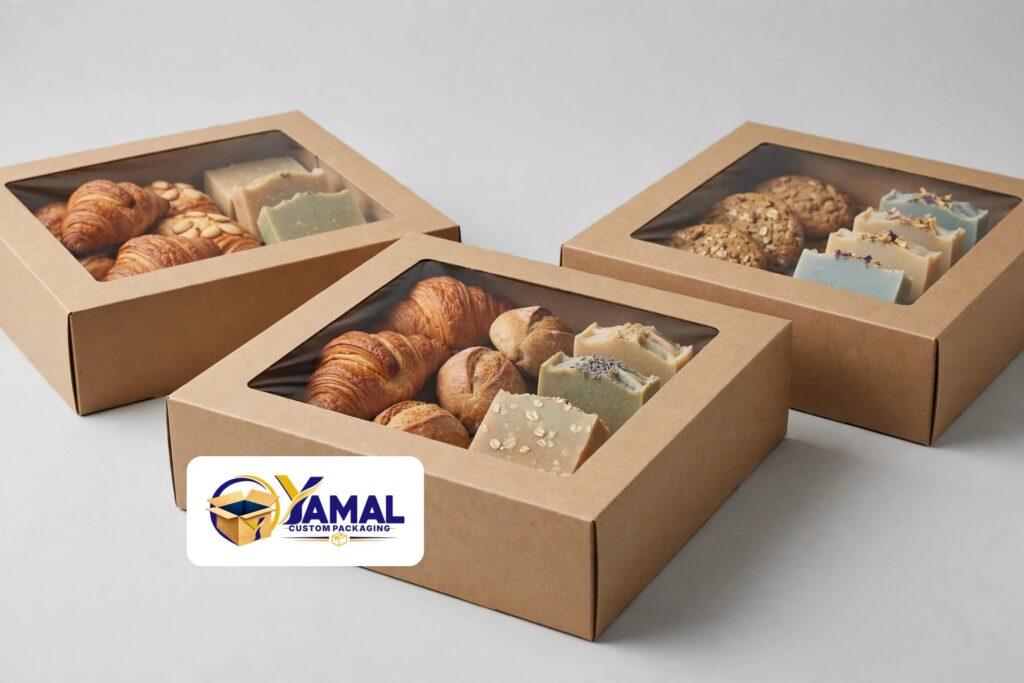
And “per component” is the bit that catches people. The tax doesn’t look at your finished pack as one thing; it looks at the pieces. So a paper box is fine — paper isn’t plastic, it’s outside the tax entirely. But the little plastic window set into that paper box gets judged on its own. If that window is virgin plastic, it counts towards your tonnage and your bill, even though the box around it is cardboard.
Who actually has to pay
The liability sits with whoever manufactures the plastic packaging in the UK, or imports it — and importing includes bringing in goods that arrive already packed in plastic. That second part surprises people. You might never have bought a roll of plastic film in your life, but if you’re importing finished products wrapped in it, the packaging can still land on your side of the line.
If, on the other hand, you buy finished paper-based boxes from a UK supplier and pack your own products into them, the tax almost certainly isn’t yours to pay. The chain of liability sits further up. Where it gets murky is the in-between cases — importing some lines, packing others — and murky is exactly where you should stop reading blog posts and ask your accountant or HMRC. Getting this wrong in the optimistic direction is how penalties start.
The paperwork is the real job
Cross the 10-tonne threshold and you have to register with HMRC, online, through GOV.UK. This applies even if every component you handle turns out to be exempt — registration isn’t optional just because your bill would be zero. After registering, you file returns quarterly.
Then there are the records. For each component you’re expected to know its weight, its recycled content, whether it was made here or imported, and — this is the part people skip — the evidence behind the recycled content figure. Keep those records for six years.
Evidence is where good intentions fall apart. Your supplier saying “yeah, it’s about 30%” on the phone is not evidence. What’s needed is the boring stuff in writing: specifications, certificates, test results, something you could actually hand to an HMRC officer. If you’re relying on recycled content to stay exempt, get the paperwork before you need it, not after a letter arrives.
Late registration and late returns attract penalties, and HMRC has been putting noticeably more effort into checking this tax than it did at the start. “We didn’t know” was never a great defence, and it isn’t getting any better with time.
The simplest way to pay less of it
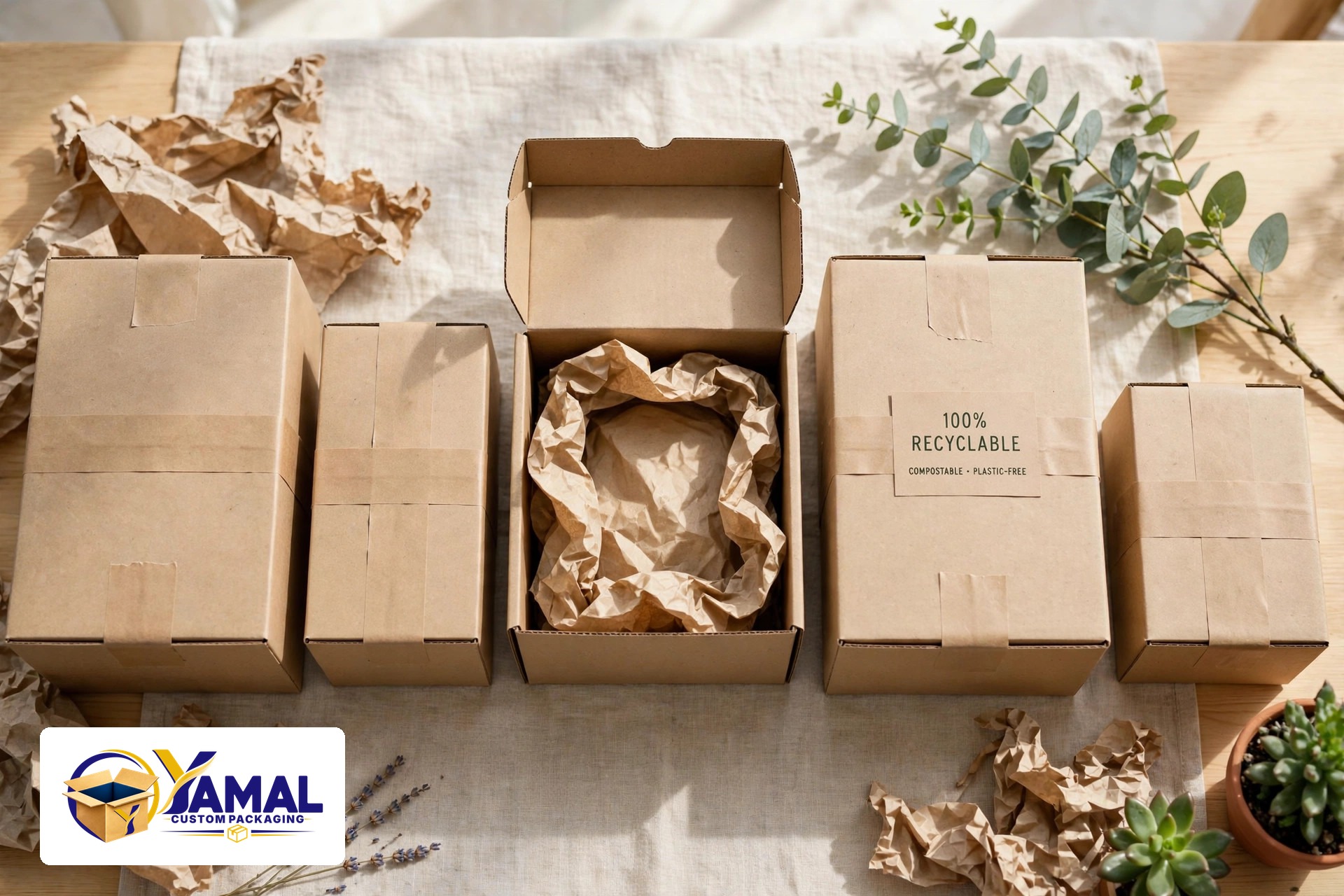
Use less plastic. That sounds glib, but it’s genuinely how most brands handle this. Paper and board aren’t in the tax at all, so every plastic component you swap out is a component that never has to be weighed, evidenced or worried about. The swaps tend to be unglamorous: paper tape instead of plastic tape, paper void fill instead of bubble wrap, a board mailer instead of a poly bag. For the plastic that has to stay — some products honestly need it — the move is to push it over the 30% recycled line and get the evidence filed away while you’re at it.
There’s a side effect worth having. Customers have got noticeably less patient with plastic-heavy parcels over the last few years. A parcel that arrives in paper tends to get a better reaction than one that crackles. A good chunk of the work we do at Yamal Custom Packaging is exactly that shift — paper-based packaging for brands who’d rather design the tax out than administer it.
If you think you might be anywhere near 10 tonnes
Do the counting before anything else. List every plastic component that touches your products: windows, inner bags, seals, wrap, fill. Then ask each supplier, in writing, what the recycled content is. Then add the weights up over twelve months. It takes an afternoon, and at the end of it you know where you stand — comfortably under, or closer than you thought. Both answers are useful. Take the numbers to your accountant and have the conversation with facts in hand instead of a vague worry.
Quick questions
I only buy boxes from a UK supplier. Do I pay it?
Almost certainly not. But if you also import goods that arrive in plastic packaging, check that side of things, because importing counts.
Is paper packaging exempt?
It’s better than exempt — it’s outside the scope of the tax, because the tax is on plastic. Just watch the plastic bits attached to paper packaging, like windows and seals. Those are judged on their own.
My plastic is exactly 30% recycled. Am I fine?
That component isn’t charged, yes — provided you can prove the 30% with records if asked. The proof is not a formality. It’s most of the job.
If you’d rather not think about any of this, packaging that’s paper-based from the start is the honest shortcut, and it’s most of what we make at Yamal Custom Packaging. No minimum order, free design help, and nothing in the parcel that needs a tax return of its own.