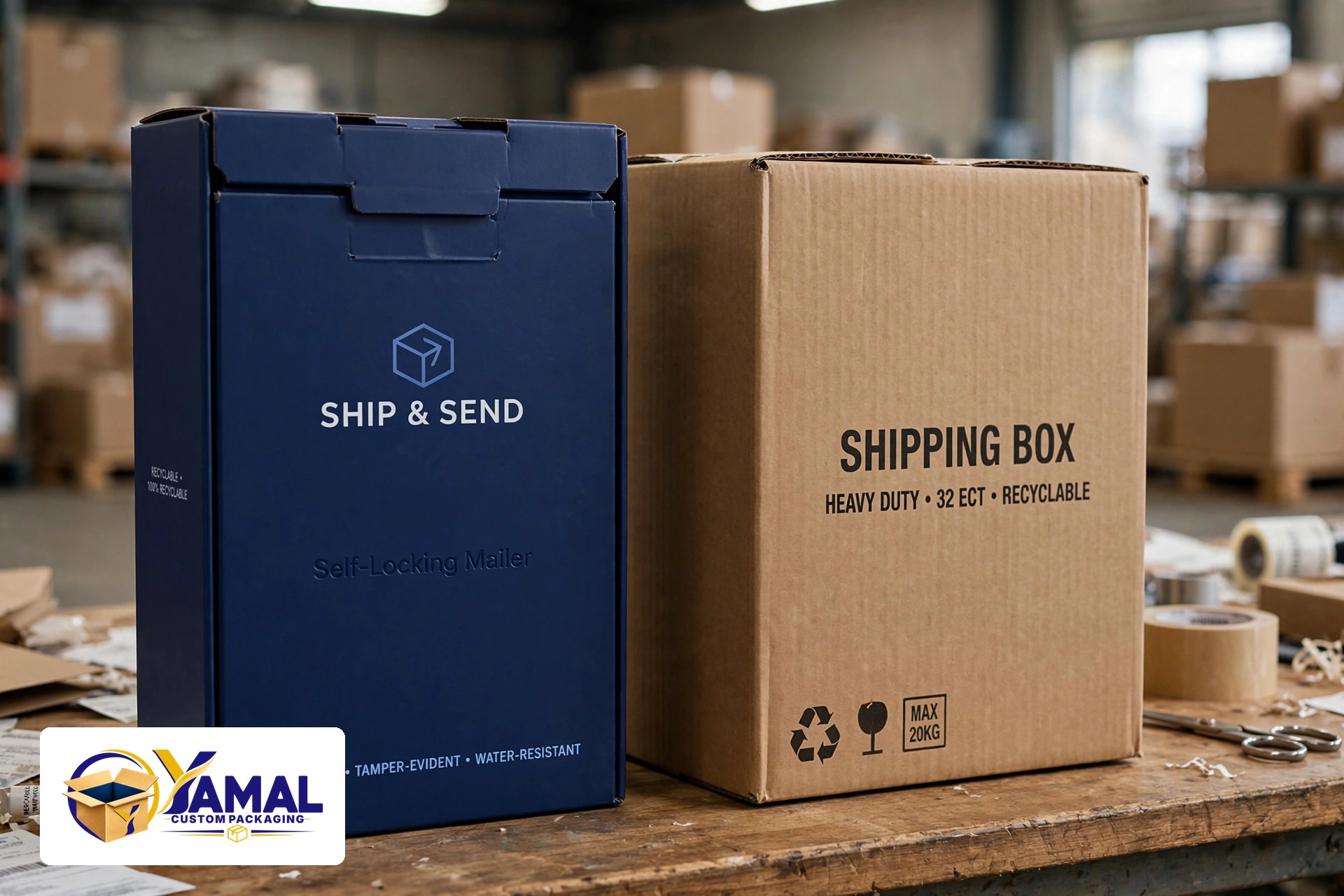
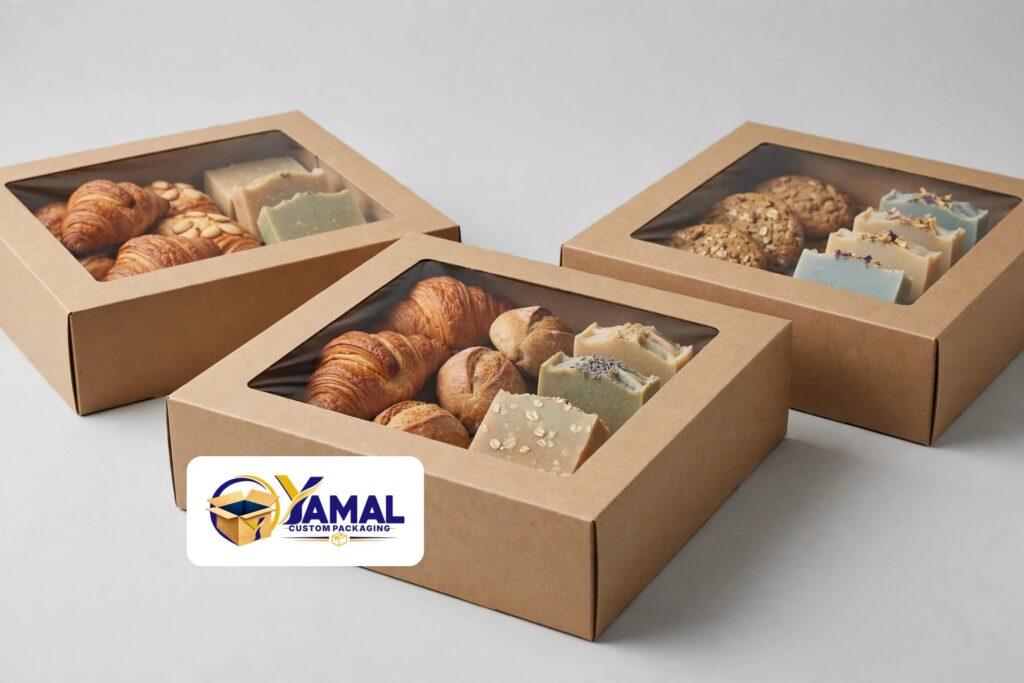
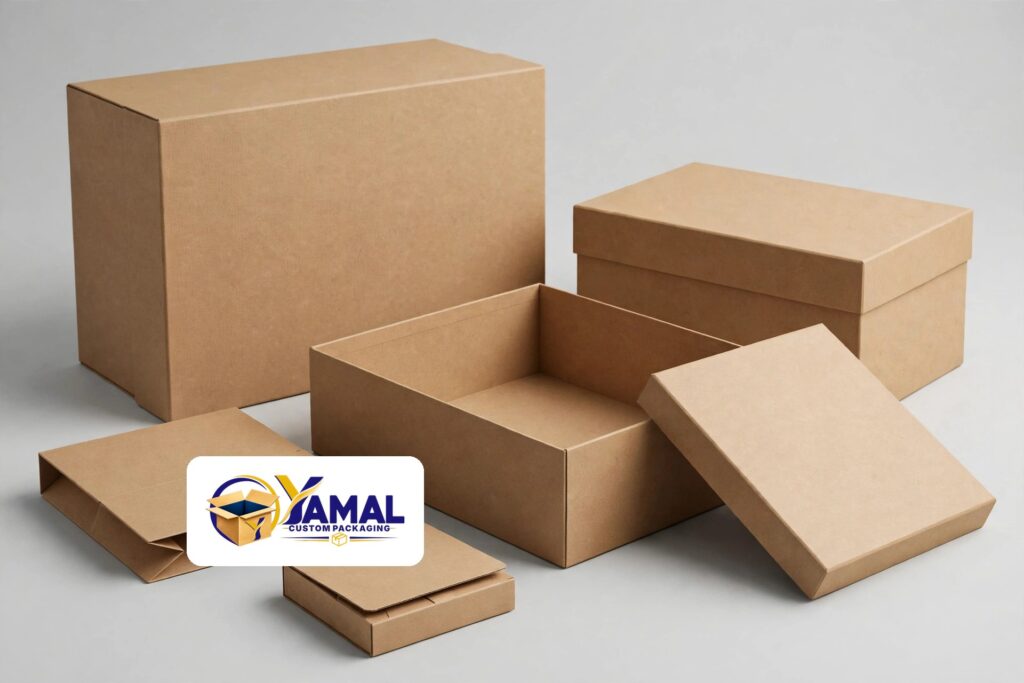
People mix these two up constantly. Including, awkwardly, some people who sell packaging. A customer asks for a shipping box when they mean a mailer, or orders mailers for something fragile, and then everyone’s surprised when things turn up dented.
They’re both boxes. That’s where the similarity mostly ends. Quick definitions first, because everything else follows from them.
What a mailer box is
A mailer box is the one your customer opens.
It’s die-cut from a sheet of board, it folds together and locks shut on itself — tabs and dust flaps doing the work, no tape needed — and it usually turns up at your door flat, so you fold it as you pack. It’s printed, very often on the inside as well as the outside, because the inside of the lid is the first thing seen when the box opens and brands have worked out that’s valuable space.
Subscription boxes are mailers. So are most of the tidy branded boxes that clothing and beauty brands send out. A mailer is really part of the product. It’s doing a selling job, not just a carrying job.
Most mailers are a thinner corrugated board or sturdy card, which protects light things well enough. Well enough is the honest limit of it, and we’ll come back to that.
What a shipping box is
A shipping box is the plain workhorse of the pair.
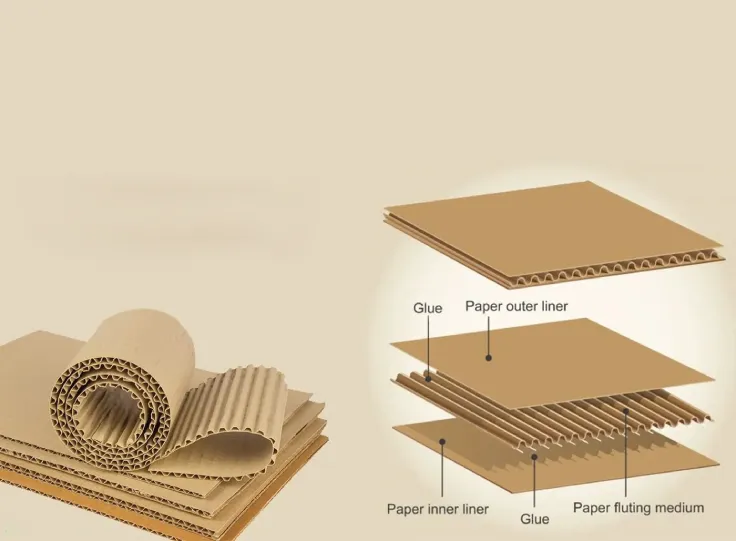
Corrugated board — a fluted layer sandwiched between two flat liners — cut and creased into a box you tape shut. The fluting is the entire point. It crushes a little so your product doesn’t have to. It takes the knocks from conveyor belts, van floors and doorsteps, and it does this job thousands of times a day without anyone thinking about it.
Mostly they come in brown or white and mostly they’re unprinted, though plenty of brands print them now. Nobody frames a shipping box. Nobody photographs one for Instagram. It isn’t there to be admired. It’s there so the thing inside survives the journey — that’s the whole brief.
The difference that actually matters
It isn’t size. It isn’t even strength, not really. It’s the job.
A mailer is the presentation layer: the box the customer sees, opens, sometimes keeps. A shipping box is the armour layer. It exists for the journey and gets recycled without a second thought, which is fine, because that was always its purpose.
Some products only need the presentation layer. Some only need the armour. Quite a few need both. Once you look at it that way, choosing gets a lot simpler than the internet makes it sound.
When a mailer is enough
If what you’re sending is light, not fragile, and going straight to the customer’s door, a mailer will usually do the job on its own. Clothes. Cosmetics in sturdy jars. Books and stationery. Subscription goods. Most things that won’t shatter when the parcel gets dropped on a doorstep — and it will get dropped on a doorstep at some point, whatever the courier’s website promises.
If your brand lives on the opening moment, the mailer’s the one earning its money anyway. For what it’s worth, at Yamal Custom Packaging the mailer is the box we’re asked about most, and for straightforward online orders it’s the right answer more often than not.
Just don’t ask it to do a shipping box’s job. There’s a limit to what thin board can forgive, and a heavy glass candle will find that limit for you.
When you need the shipping box
Heavy things. Fragile things. Glass, ceramics, electronics, anything sharp-cornered that can punch its way through thinner board from the inside. Orders with several items in them that can knock against each other on the move. Anything travelling a long way, going overseas, or passing through several depots before it reaches anyone.
In those situations a mailer on its own is a false economy. One smashed delivery costs you the product, the postage twice over — out and back, or out and out again — and probably the customer as well. Use the corrugated box. Add void fill or inserts if things can slide around inside. Tape it properly. It’s not glamorous advice. It works.
Plenty of brands just use both
Mailer inside, shipping box outside. The customer still gets the nice reveal; the parcel gets its armour for the journey.
Yes, it’s two boxes, and yes, that costs more than one. For fragile or expensive orders it’s still cheaper than returns, and it means the pretty box arrives pretty instead of scuffed by the postal system. Some brands print the outer box too and treat the whole parcel as the advert. Others keep the outside plain, which has its own logic — a plain parcel doesn’t announce what’s inside it.
Storage and the packing bench
Not the deciding factor, but not nothing either. Both types arrive flat and stack on a shelf without much fuss. Mailers fold together by hand in a few seconds, which matters when you’re packing a hundred orders against a courier deadline. Shipping boxes need tape and a tape gun, and a made-up stack of them eats bench space fast — most people keep a small tower ready and fold more as they go.
If you’re packing from a kitchen table or a spare room, that difference in faff is real. If you’ve got a warehouse and a packing line, nobody cares. Scale changes what matters, as usual.
The postage bit, which settles a lot of arguments
Couriers charge by size bands as much as by weight, and this catches people out with both box types. An oversized mailer carrying a small product can push you up a band and quietly eat whatever you saved on the box. Meanwhile a right-sized shipping box, even though the board’s heavier, can be the cheaper option overall once postage is counted.
So measure the product and pick the smallest box that protects it properly, whichever type it turns out to be. The tape measure settles more packaging arguments than any guide does. Including this one.
A rough rule of thumb
If the opening moment matters and the product can look after itself, it’s a mailer. If the journey is the risky part, it’s a shipping box. If both of those are true at once — and for a lot of growing brands they are — it’s both, one inside the other.
Still not sure? Tell whoever’s making your packaging what’s going inside the box and how it’s travelling. It’s a two-minute conversation. It is, honestly, most of what we do at Yamal Custom Packaging: match the box to the product and the journey, rather than selling you whichever box we mentioned first. That conversation will save you the usual round of trial and error, which tends to be the expensive way of learning all of the above.