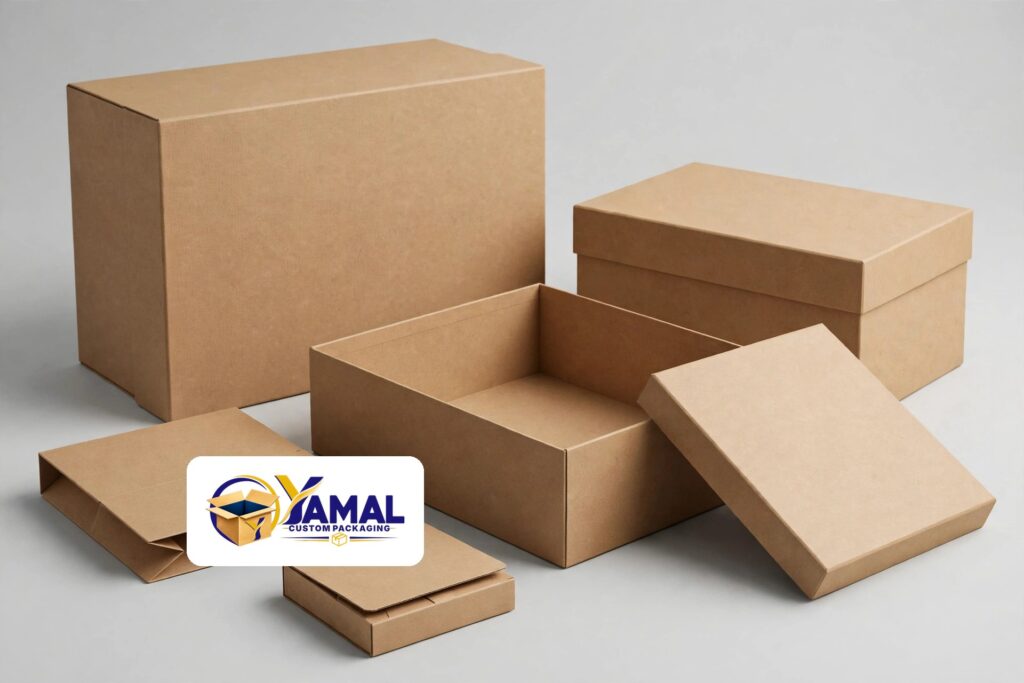
Somebody rings up, usually on a weekday morning, and asks the question quietly, like they’re expecting to be laughed at. “What’s the smallest amount I can order?” Then they apologise for asking. There’s no need. It’s probably the most sensible question a new business can ask, and for years the packaging industry gave a daft answer to it: five hundred. Sometimes a thousand.
If you’re reading this, chances are you’ve already had that conversation with someone. So here’s what’s actually behind minimums, what ordering a small run involves in practice, and the point where small runs stop being the clever option.
Where the minimum comes from
It isn’t pure stubbornness, whatever it feels like at the time. Setting up a print job takes work whether the run is fifty boxes or five thousand. Somebody builds the cutter guide, sets the machine, checks the first sheets off the press. That labour costs roughly the same either way. Spread over five thousand boxes it’s pennies nobody notices. Spread over fifty, it doesn’t disappear anywhere. It sits right there in the quote, obvious as anything.
The traditional answer was to refuse small jobs altogether. Simpler for the printer. Hopeless for anyone starting out, but that wasn’t the printer’s problem.
What’s changed is the machinery. Digital printing doesn’t need plates made, and changeovers are quicker, so the setup cost that justified big minimums has shrunk a lot. Some suppliers have passed that on and dropped minimums entirely. Others still say 500 because they’ve always said 500. Worth working out which sort you’re talking to before you plan anything around their answer.
The spare-room problem
Here’s the bit that never shows up in the per-unit maths. The 500-box quote will be cheaper per box. It nearly always is. So you order them, and they arrive — a pallet, or a tower of cartons that now lives in the hallway because the spare room is already full of stock. Then in month two you change the logo slightly. Everybody does; the first version of anything is never the final one. Now 430 of the boxes are wrong. Not unusable, exactly. Just wrong enough that you wince a bit every time you post one out.
Dead boxes are a real cost. It just doesn’t arrive on an invoice, and neither does the rent on the corner of the room they’re stored in. A run of 60 or 100 boxes at a higher unit price almost always costs less in total money actually spent, and it leaves you able to fix mistakes while they’re still cheap. At Yamal Custom Packaging we regularly hear from people at exactly this point in the story, usually with a garage full of the evidence.
What a small order actually involves
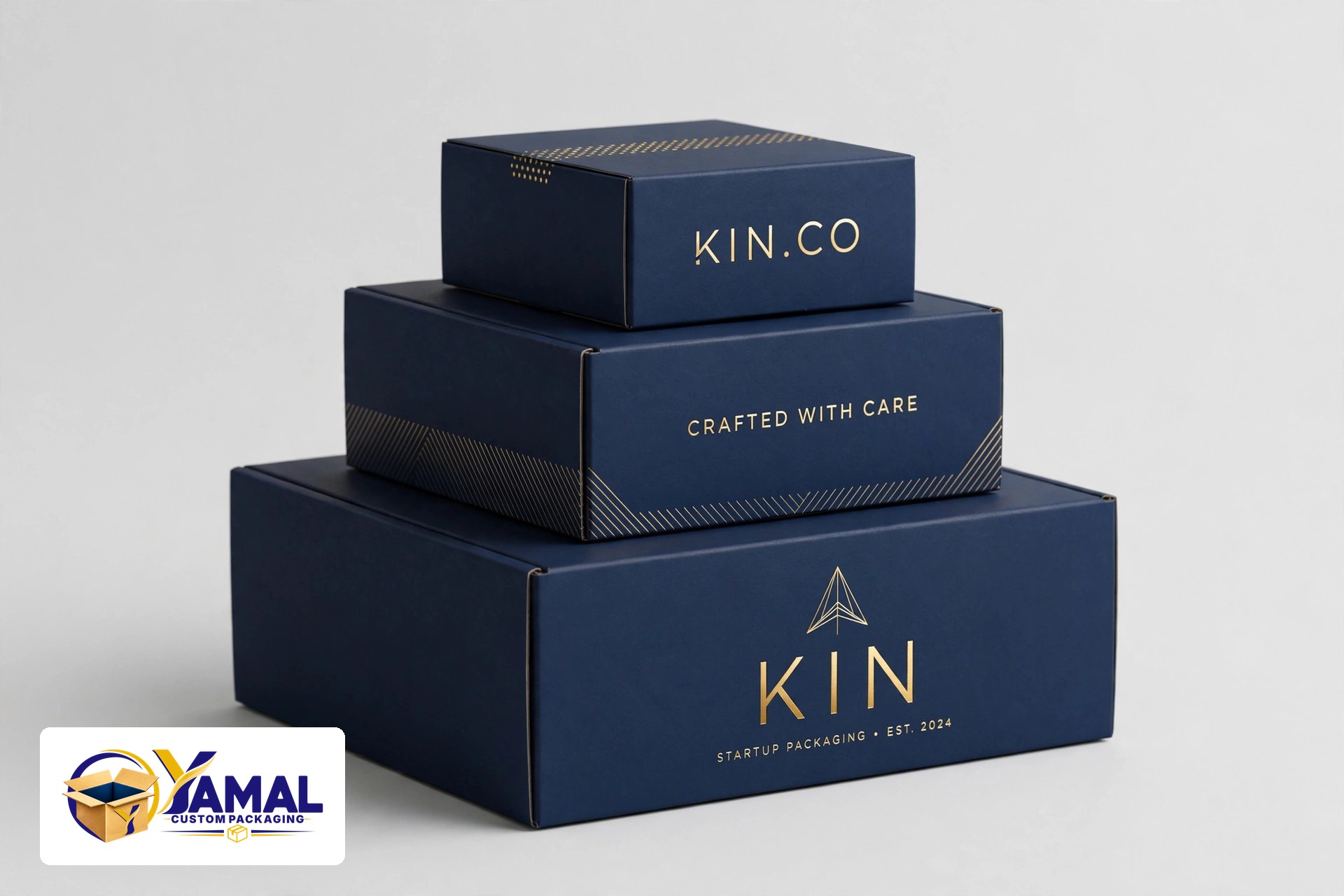
Much the same as a big one, which surprises people. You send your product dimensions, or the product itself if it’s an awkward shape. You get a cutter guide. Your artwork goes on it — or you get help with that, because design support is free with us and small brands are the ones who actually use it. You approve a digital proof. The boxes get made. Same board and inks and finishes as a run of ten thousand, because the machinery doesn’t know how many you ordered.
You’ll pay more per box. Nobody honest will pretend otherwise. But look at the money leaving the account, not the unit price: a hundred boxes at a small-run rate is one modest bill. Five hundred at the bulk rate is a bigger one, for boxes you might not need until next year, if ever. At the starting-out stage, the total matters more than the unit cost. It isn’t close.
One warning, though. A few places advertising no minimum order mean something narrower by it — three set sizes, your logo printed on top, take it or leave it. That’s not custom packaging. That’s a sticker with ambitions. If the box can’t be made to your product’s dimensions, it isn’t the thing you were looking for, whatever the website says.
When a small run is exactly right
Launches, obviously. But it goes broader than that. Seasonal things: a Christmas version of the box, a short run for one particular market or a summer fair. A rebrand, where you need something decent going out while the new design settles. Expensive products that sell in low numbers, where fifty good rigid boxes make complete sense and five hundred would be madness. Samples for a retail buyer, where the actual box in their hand does half the persuading before you’ve said a word.
Basically, any time the honest answer to “how many will I sell?” is “I’ll find out.” Which, if we’re being truthful about it, is most of the time at the start.
The point where you should stop ordering small
It sneaks up on you. You’re reordering every fortnight. The unit price has started to genuinely annoy you rather than just exist. The design hasn’t changed in six months and the storage is sorted. That’s the crossover, and it’s a good problem to have.
Ask about it early, is my advice. Get prices for 100, 500 and 2,000 at the start, even if you only order the 100. Then you can see the shape of the curve and you know what growing will cost when you get there. Nobody’s surprising anybody later on. If a supplier won’t show you those numbers, it’s worth wondering why.
Questions people actually ask
Does no minimum order mean worse quality?
It shouldn’t. Same materials, same print, same finishing — the difference is quantity, not standard. If a supplier hints that the small-run version is somehow a lesser product, that’s a confession about them, not a rule of the industry.
Can I still have foil or embossing on 80 boxes?
Yes. The finishes behave the same at low volumes. You do pay the setup for each finish, so the sensible move is picking one and doing it well rather than paying for three.
What if my product doesn’t fit standard sizes?
Then standard sizes were never really the offer. A proper no-minimum service cuts the box around your product. Measure it carefully — length, width, depth, in millimetres — and if it’s fragile or a strange shape, say so at the start rather than after the proof comes back.
Starting small isn’t a compromise version of starting. It’s just starting, with the money still in your account where it belongs. Yamal Custom Packaging runs no minimum order on custom boxes, and the design help is free if you want it. Send us the product and roughly what you’re thinking, and we’ll tell you straight whether 60 boxes or 600 makes sense for where you are right now.