Last month I watched a friend open two parcels on her kitchen table. Kettle still warm, dog asleep under the table, the usual Saturday chaos. One parcel was from a big online retailer. Grey mailing bag, product sloshing about inside, invoice folded in half. The other was from a small candle brand she’d found on Instagram.
She spent about four seconds on the first one. Scissors, rip, done, bag in the bin. The second one she opened slowly. She turned the box over in her hands first. She read the inside of the lid. Then she took a photo of it — candle still sitting in the box — and WhatsApped it to me. I was sitting right there.
That photo is basically the whole argument for bothering with unboxing. Nobody photographs a grey mailing bag.
It happens on a kitchen table, not a film set
Most unboxing content online is theatre. Ring lights, clean hands, someone gasping over tissue paper. Your actual customers open parcels standing in hallways, half-dressed for work, using a car key because the scissors have vanished again. They are not savouring anything.
This matters, because it means you’ve got a very short window and everything has to survive impatience. What registers in that window isn’t complicated. Does the parcel look cared for, or does it look like it was packed by someone who’d given up? That’s honestly most of it. Everything below is just ways of landing on the right side of that question.
The outside does more work than you think
Before anything gets opened, the box has already said something. Battered corners, tape peeling off, a label slapped on crooked — people brace themselves. It doesn’t mean the product’s bad. It just starts the whole experience on a shrug.
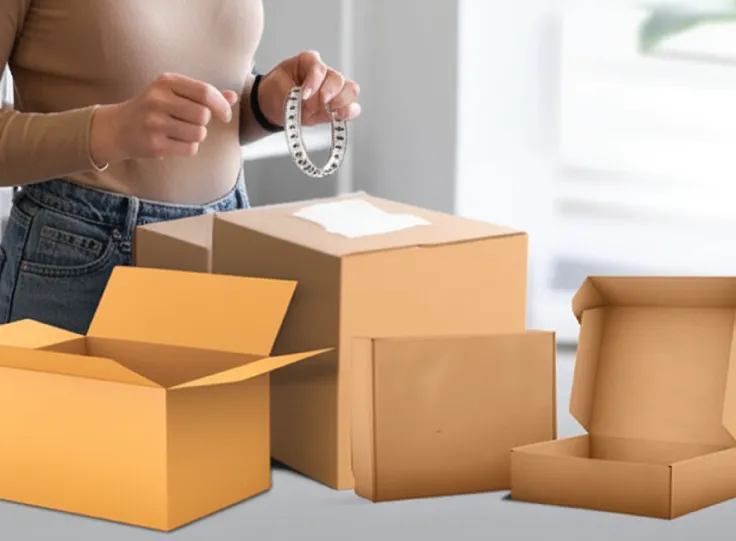
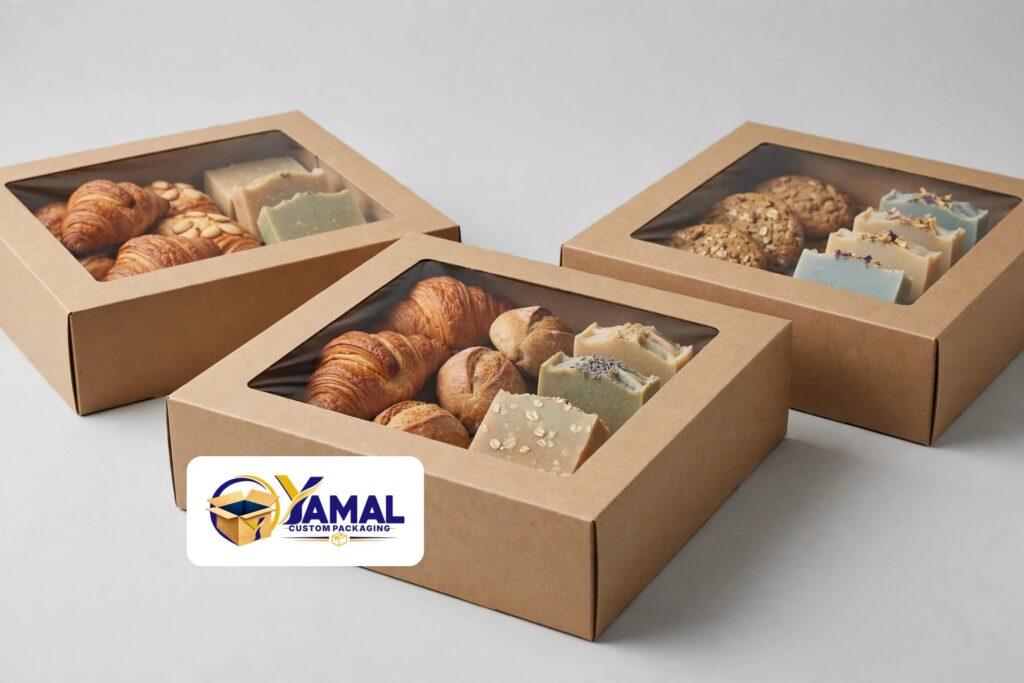
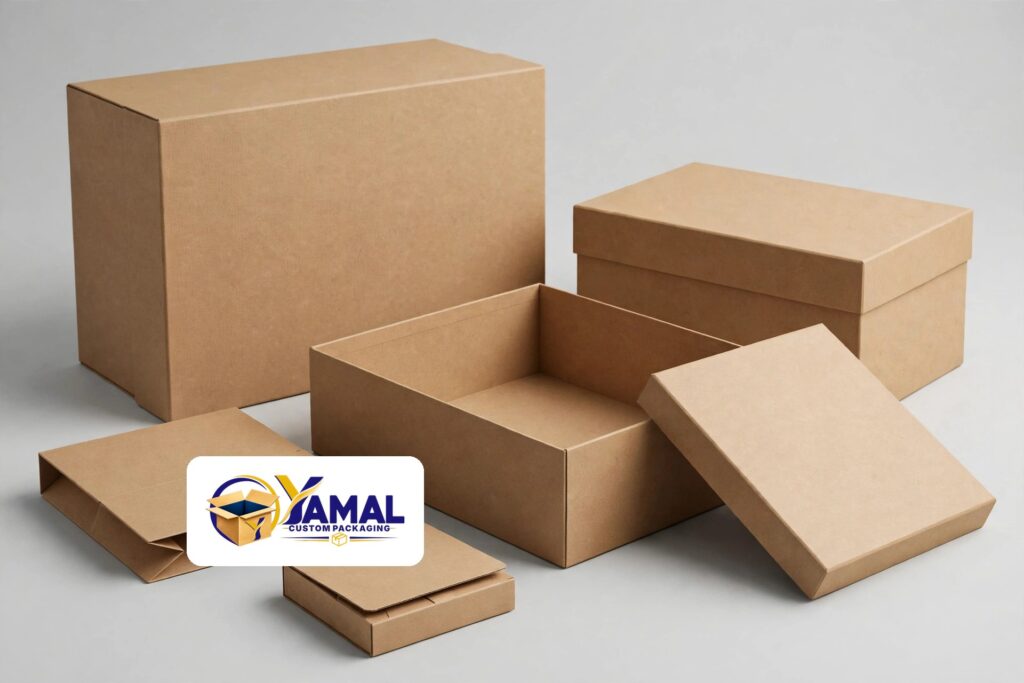
The fix isn’t expensive. A box in your colour helps, obviously, but even a plain brown box with one decent sticker on it changes the feeling. It says a person packed this on purpose. Compare that with the standard alternative, which is whatever packaging was lying around the stockroom. Customers can’t see your stockroom, but they can tell.
Pick one nice touch and do it properly
The mistake I see most is brands trying to do everything at once. Tissue and ribbon and a sachet of dried petals and a scratch card and confetti that gets into the carpet. It reads as effort, sure, but also as noise, and half of it ends up in the bin before the product does.
Pick one thing and do it well. A single sheet of tissue in your colour, folded once over the product, costs pennies and makes the thing feel wrapped rather than stored. That’s probably the best-value upgrade there is.
A note works too, if it’s short and sounds like a human. “Thanks for ordering — hope the candle behaves. Dan.” Something like that. The candle seller I mentioned writes the scent name on the card by hand, which takes her seconds, and customers mention it in reviews constantly. If your volumes are too big for handwriting everything, fine — but at least sign with a real first name. “From the team” fools nobody.
Scent is the other cheap trick, if your product has a smell worth having. A drop of fragrance on the tissue, the inside of a soap box that smells of the soap before it’s even unwrapped. It sounds like a gimmick until you catch yourself remembering a brand by it weeks later, which I have, more than once.
The inside of the lid is sitting there empty
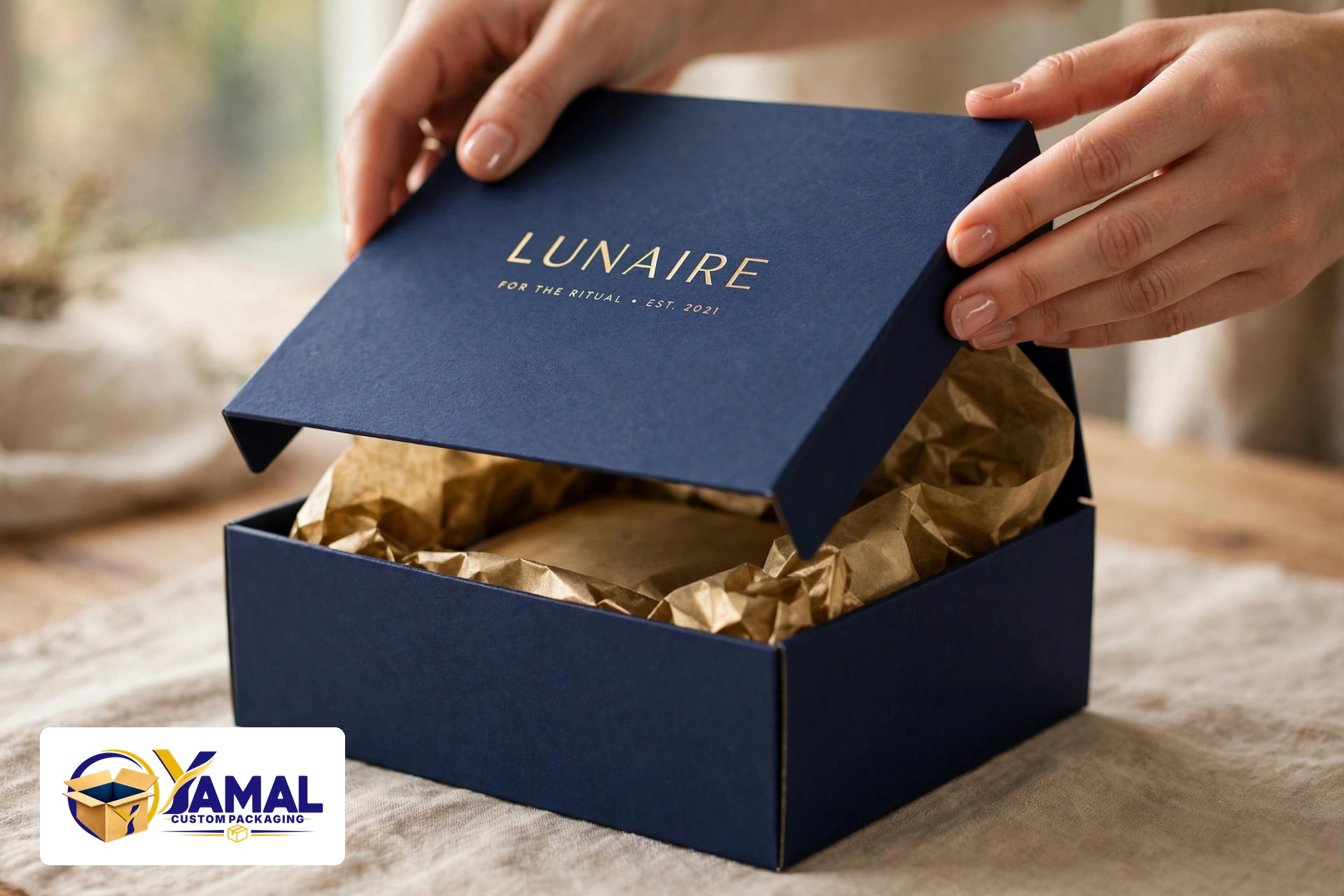
Almost every box ever made gets opened, and the inside of the lid is blank. It’s the one part of the parcel that’s guaranteed to be looked at, at the exact moment the customer’s paying attention, and most brands leave it empty.
Print something there. A line of text, your story in two sentences, care instructions written the way you’d actually say them. It costs little because it’s part of the same print run as the rest of the box. We print inside lids on mailers all the time at Yamal Custom Packaging, and it’s the feature brands ask about most once they’ve seen their first batch opened by real customers — because it turns up in their reviews. People quote it back at them.
If printing isn’t an option yet, a stamp or a sticker does the same job worse but cheaper. The point is that the space gets used.
Something to keep, nothing to fight with
Think about what survives the first five minutes. A good card survives — it goes on the fridge or stays in the box. A sticker survives, on a laptop or a water bottle. Discount codes survive if the discount’s real.
What doesn’t survive: shredded paper fill that escapes across the floor and has to be hoovered up. Glitter, ever. A box inside a box inside a bag, which makes people feel like they’re doing admin. And packaging that fights back — so much tape they need three attempts with the scissors, by which point the delight has curdled into irritation. If opening your parcel makes a mess or a chore, that’s the memory they keep, not the nice tissue underneath it.
A quick word on plastic
If your brand talks about sustainability — and a lot of small brands do, it’s often the reason people buy from them — the parcel has to roughly agree with the claim. A product wrapped in three different plastics under a card that says “we care about the planet” creates a wobble, and customers notice wobbles. You don’t have to be perfect. Nobody’s auditing you. Just don’t let the packaging contradict the marketing out loud.
How do you know if any of this is working?
Not scientifically, I’ll be honest. But there are signs. Reviews that mention the packaging without being asked. Photos you’re tagged in. Repeat orders from first-time buyers creeping up. A QR code on the card pointing at your review page will tell you something too, even if the numbers are small.
You can also just ask. One question on the thank-you card — “what did you think of the packaging?” — and read whatever comes back. It won’t be a statistically valid sample. It’ll still be more useful than guessing, and people quite like being asked.
Start with the box looking deliberate, one touch done properly, and a note that sounds like a person wrote it. That’s most of the effect, for not much money. And if you want a hand with the box itself — sizing it to the product, printing the inside of the lid, keeping the colour consistent from run to run — that’s the work we do at Yamal Custom Packaging. The design support is free and there’s no minimum order, so it’s a reasonable place to start even if you’re only sending a few dozen parcels a week.