Most packaging decisions get made backwards. Someone likes the look of a box, or copies a competitor, and the material gets chosen by accident. Then the products go out and the problems start — usually somewhere between the stockroom and the customer’s doorstep.
The material is the unglamorous part, but it decides whether your product arrives intact, whether the box still looks respectable after a week in a van, and whether you’ve paid for strength you never needed. Here’s what the main options are actually like to use. Not the brochure version.
The short version
If your product is light and lives on a shelf, it’s probably carton board. If it’s posted, think corrugated. Kraft is the brown, honest-looking option. Rigid board is the heavy one that makes things feel expensive. And food that needs to stay fresh might not belong in board at all — that’s where mylar pouches come in.
That’s the guide in a paragraph. The rest is how each one goes wrong.
Carton board: the everyday one
This is what most people mean by “cardboard”, although strictly it’s carton board — solid board, no wavy middle. Cereal boxes are made of it. So are lipstick cartons, tea boxes and most of the neat little packaging on pharmacy shelves.
It folds flat, stores in almost no space, and prints beautifully — fine detail, bright colour, clean edges. If your product is light and the box’s job is mainly to look good and carry information, it’s hard to beat, and at small sizes it’s usually the cheapest sensible route.
Its weakness is crush. Put something heavy on top and it gives. Send it through a courier network with nothing around it and the corners will show it. The other quiet problem is damp. An uncoated carton in a cold garage or a stockroom with a leaky corner will slowly drink moisture and go soft at the edges.
Thickness matters more than people expect, too. Too thin and dark colours crack white along the fold lines, and the box feels like a cereal packet whatever you print on it.
Corrugated board: built for the journey
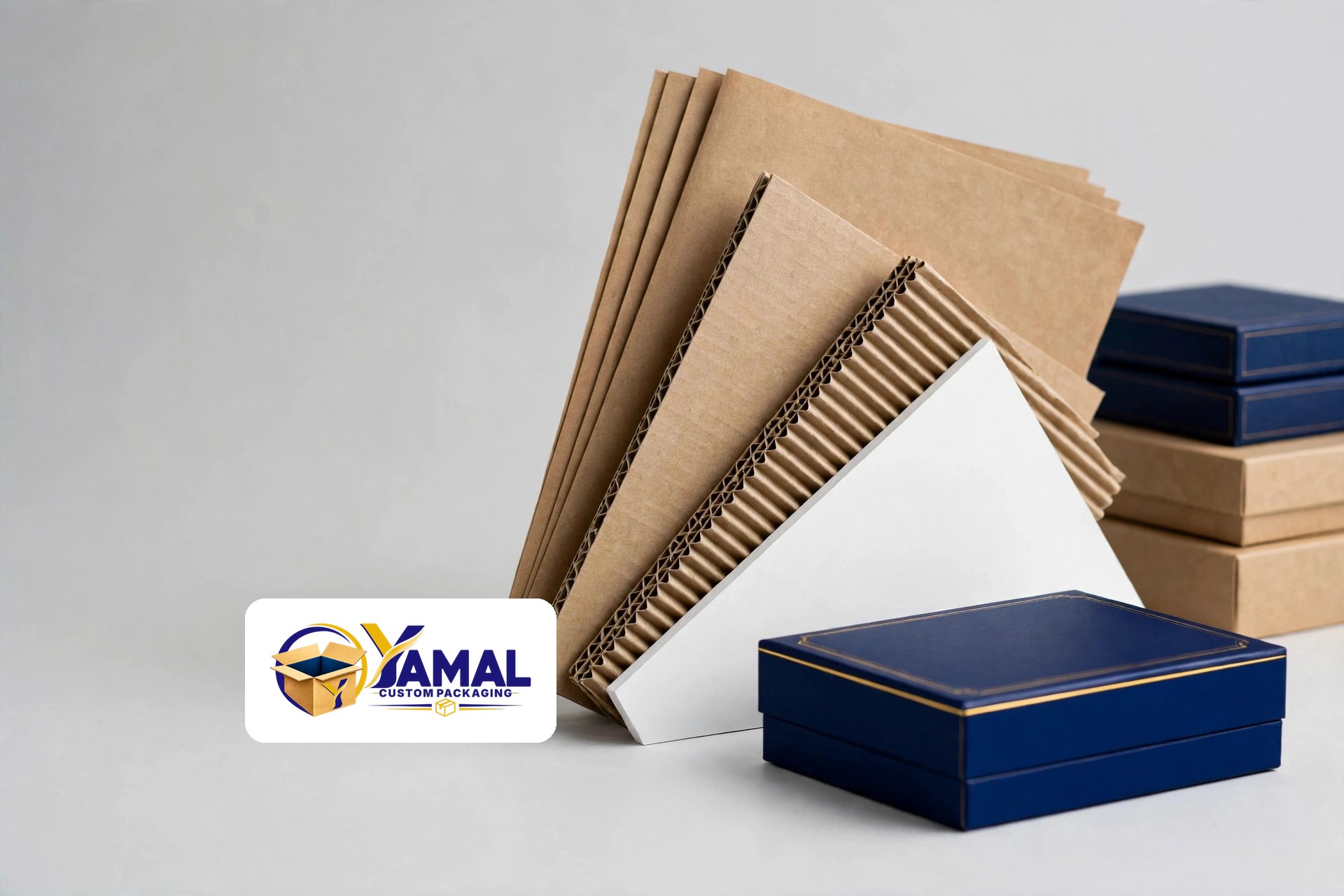
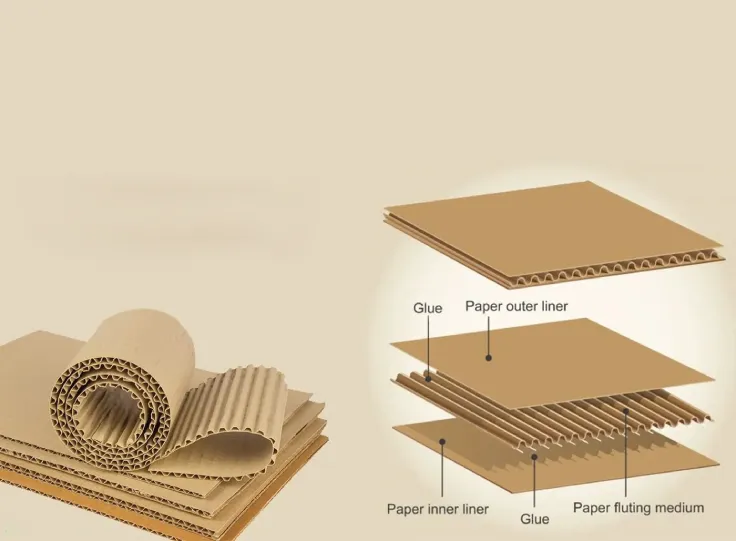
Corrugated is the one with the fluting — the wavy layer sandwiched between flat sheets. That wave is why it’s so much harder to crush. It’s the material of shipping boxes and e-commerce mailers, and it’s the right answer whenever the box has to travel.
The trade-offs are real. It takes up more storage room. It doesn’t take fine print as crisply if you print straight onto it, so detailed artwork goes on a liner or gets laminated on, at extra cost. A big corrugated box around a small light product is usually overkill, in looks and in cost.
Where it goes wrong: a brand starts at market stalls, packs in pretty carton board, then moves online and keeps the same box because it worked fine. It did. On a stall. A depot conveyor and a wet doorstep are a different life.
Kraft: a material and a look at the same time
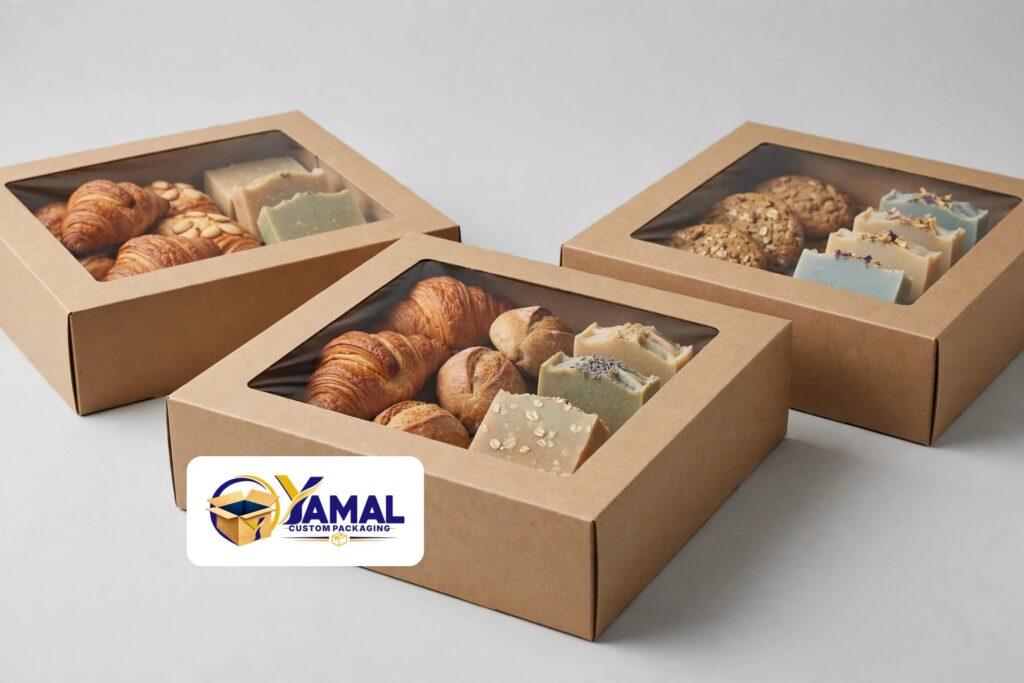
Kraft is the brown one — unbleached, strong for its weight, and now shorthand for a certain kind of brand: natural, unfussy, probably eco-minded whether anyone’s checked or not.
A few practical things. Kraft isn’t automatically cheap; good kraft board costs what good board costs. Recycled kraft also varies more in shade between batches than white board does — one run a warm mid-brown, the next slightly greyer. Most customers never notice. If your brand colour has to match a printed leaflet exactly, you will.
Print sits differently on it, too. Colours come out darker because the brown shows through, and white in a design is an ink that has to be laid down, not paper showing through. Done knowingly, it looks great. Done by accident, it looks like a printing error.
One more for food brands: plain kraft isn’t greaseproof. Buttery or oily products mark it unless there’s a lining or a barrier — at which point the simple eco story gets a bit more complicated.
Rigid board: the heavy one
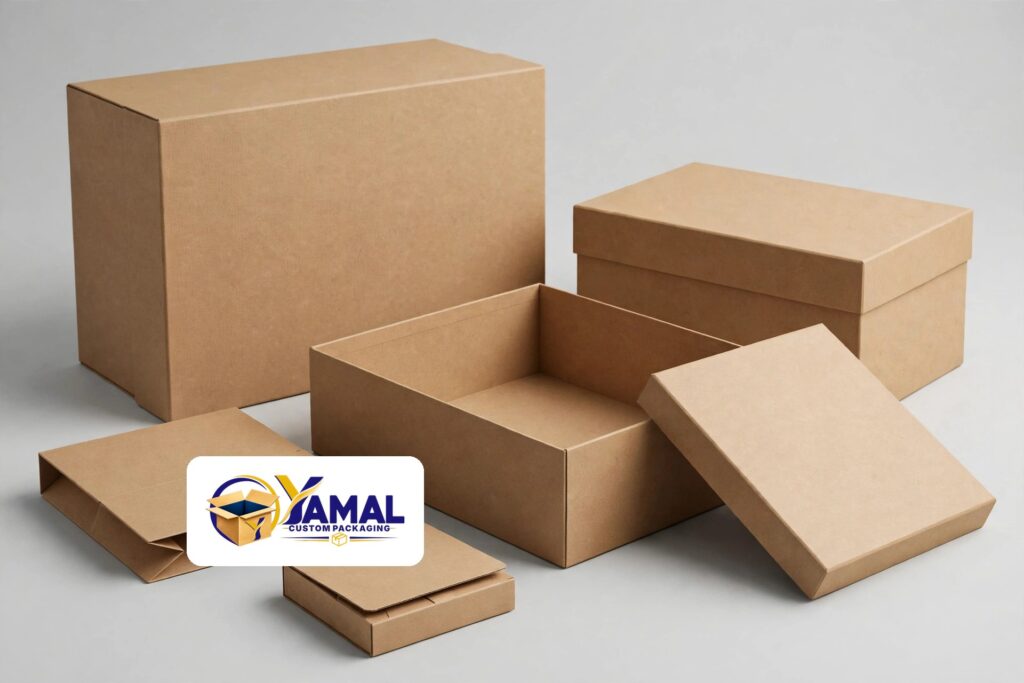
Rigid board is chipboard — thick, dense, doesn’t fold — wrapped in printed or textured paper. Drawer boxes, magnetic lids, the boxes watches and jewellery arrive in. It’s the material that makes a product feel like an occasion before the lid’s off.
It isn’t practical in the way the others are. Rigid boxes don’t collapse, so they’re bulky to store and ship — you’re partly paying to move air — and the unit cost is higher. At Yamal Custom Packaging we talk people out of rigid board more often than you’d expect — for a £60 candle it can be the right trade, but for an £8 product it usually isn’t. The box ends up a silly share of the retail price, and customers sense the mismatch even if they can’t name it.
Use it where the keeping matters. A rigid box stays on the dressing table. That’s its job.
Mylar pouches, briefly
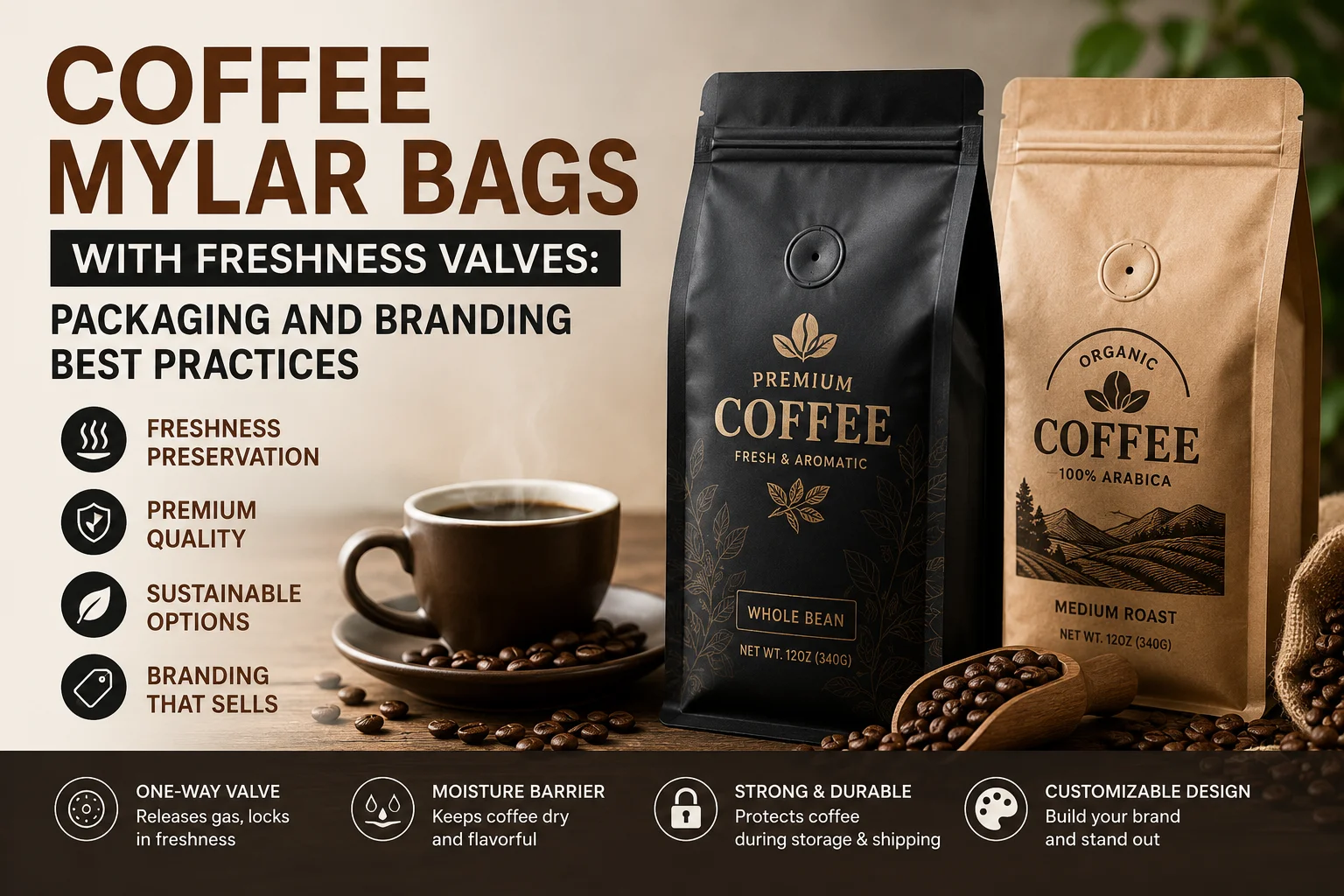
Not board at all, which is why pouches get forgotten in these conversations. Mylar pouches are laminated film, usually with a foil layer, made into stand-up pouches or flat bags. Coffee, granola, protein powder, pet treats — products where air and moisture are the enemy.
The barrier is the point. Board breathes; a decent pouch mostly doesn’t. If your problem is freshness rather than shelf presence, the honest answer might be a pouch and a good label. Pouches also ship flat and weigh almost nothing. You give up the unboxing moment, though, and the recycling story is weaker, whatever it says on the pack.
Mistakes we see again and again
Choosing from the sample on your desk. Everything looks fine on a desk. The tests that matter are a stack of twelve on a shelf, a rainy doorstep, and the bottom of a courier van. Ask what the box has to survive, not just what it has to look like.
Going thinner to save money. Dropping a board grade saves a few pence a unit and then pays out in crushed corners and returns. It’s about the most expensive saving in packaging.
Forgetting storage. Flat cartons for a whole range might fit under one bench. The same range in rigid boxes can fill a room. If your storage is a spare bedroom or a rented unit you’re already moaning about, that can settle it faster than any design preference.
Ignoring weight. A 30cl candle in glass is a heavy little object. It needs board that holds it without the base bowing.
At Yamal Custom Packaging, the material conversation is usually the first one we have — before sizes, before finishes — because everything else hangs off it.
A plain way to decide
Ask two questions. How heavy is it? And what journey does it take — shelf, post, or hand to hand?
Light and shelved points to carton board. Posted or heavy points to corrugated. A gift or a keeper can justify rigid. If you want the brown, unbleached look, kraft — just proof your colours on it first. Freshness problem? Have the pouch conversation before committing to board at all.
And if you’re torn between two, pick the one that survives the worse journey. Boxes rarely fail in gentle conditions. They fail on the wet Tuesday with the new courier driver.
FAQs
Is kraft always the greener choice?
Not automatically. Brown doesn’t mean better — it depends on what the board is made from, any lining on it, and whether your customer can actually recycle the result. A plain uncoated carton that goes straight into paper recycling can be the simpler story.
Can corrugated look premium?
Yes, but it costs. Print on a good liner, or laminate a printed sheet to the board, and you get most of the way there. Printed straight onto standard corrugated, good artwork still looks workmanlike.
Which material is cheapest?
Usually carton board, for small retail boxes. But size and quantity matter more than the material label — a huge carton box can cost more than a small corrugated one. And the cheapest box that arrives damaged isn’t cheap.
Can I switch materials later?
Yes, and brands do when they move from markets to online. Just know the box gets re-engineered a little — sizes and fit shift, because materials behave differently at the same dimensions. Get new samples before a full run.