“So how much is it going to cost?”
Usually that’s the first line of the first email. And the honest answer is that nobody can tell you from that email alone, which is annoying, I know. A box can be cheap or it can be silly money, and the gap between the two is mostly down to decisions you haven’t made yet. So instead of a number, here’s what the number is made of. Once you know that, quotes stop looking random.
Why there’s no price list
Packaging isn’t like buying envelopes off a shelf. Nearly every job is made to a particular size, on a particular board, with a particular print spec. Suppliers don’t publish neat price lists because the same box at two different sizes is basically two different products. What a supplier can do — what we do at Yamal Custom Packaging when someone sends over proper details — is build the price up from the parts. The parts are fairly predictable. It’s the combination that changes everything.
The board
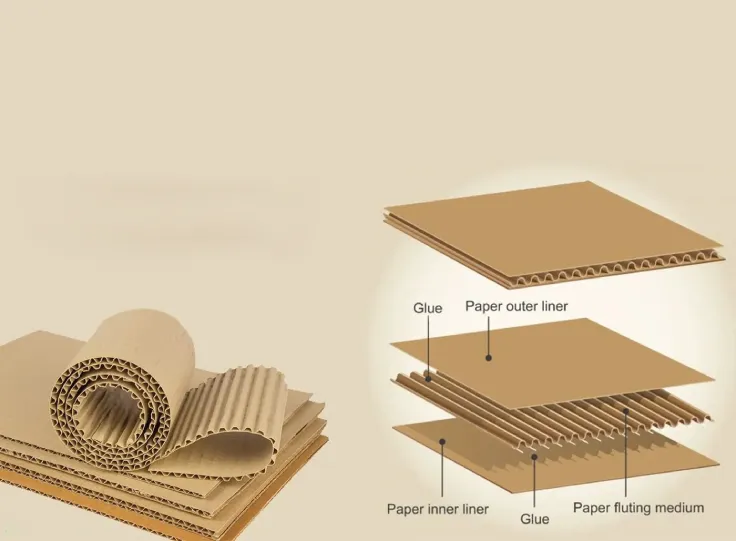
Board is the biggest chunk of the cost on most jobs. Plain kraft sits at the cheap end and there’s no shame in it. Half the artisan food brands in the country use kraft because it suits them anyway. White board costs a bit more. The thick greyboard that rigid gift boxes are built from costs the most, partly because of the material itself and partly because rigid boxes involve more hand finishing at the end.
Thickness is worth a thought too. People go up a grade “just to be safe” and then pay for that decision three times over — in board cost, in storage, in postage weight. Buy the thickness the product actually needs. Not the one that feels reassuring in your hand.
Size, which catches everyone out
Most people guess sizes. They hold the product, squint at it, add a bit for luck. Then the boxes arrive, the product is swimming in there, and they’re stuffing the gap with tissue or those little air pillows. Worse, the parcel has often tipped into the next courier price band because of two centimetres of fresh air.
Measure the product properly. Internal dimensions, in millimetres, product as it will actually sit in the box. A snug box uses less board to make and less money to post. It’s boring advice. It’s also where most of the easy savings are hiding.
How many you order
Every print job carries costs that don’t care how many boxes you order. Setting up the press. Making the cutting forme. Running the first sheets and checking the colour is right. If you order a small run, those fixed costs land on a small pile of boxes, so each box carries a bigger share. Order a lot more and the same setup gets spread thin.
That’s the entire story behind “it’s cheaper per unit if you order more.” There’s no trick and no bulk-buying mystery. The effect flattens out eventually — going from a small run to a medium one moves the unit price a lot more than going from medium to huge.
And there’s a trap at the far end: boxes you never use. A lovely unit price on stock that sits in a stockroom for two years while your branding changes around it isn’t cheap. It’s just a slow way of spending the same money.
The printing
Full colour is the default on most work now and it isn’t the extravagance it used to be. What adds cost is the extras. A specific Pantone that has to match exactly. Printing on the inside as well as the outside — usually worth it on mailer boxes, where the inside lid is the first thing a customer sees, but it is another pass. Heavy ink coverage over big areas. White ink on kraft, which needs its own pass and surprises people every time.
None of these are ruinous on their own. They just need to be in the spec from the beginning, because adding them after the quote has landed is how budgets start wobbling.
Finishes, where it quietly adds up
This is the bit that catches people. Foil stamping is a separate process. So is embossing. So is soft-touch lamination, spot UV, a patched window. Each one means another setup and another bit of money per box, and they stack up faster than you’d expect.
One finish, chosen well, lifts a box. Three finishes tend to fight each other visually anyway. So you’re paying extra for the fight. If the budget matters — and it usually does, whatever people say at the start — pick the one finish your brand actually needs and let it do the work.
The tax bit nobody mentions
If any of your packaging is plastic, there’s the Plastic Packaging Tax to factor in. From 1 April 2026 the rate is £228.82 per tonne, and it applies to plastic packaging components with less than 30% recycled content. For a straightforward cardboard box order it won’t apply at all — it’s a plastics tax, not a packaging tax in general. But if you’re using plastic mailers, pouches or wrap, the cost lands somewhere in the supply chain and shows up in prices eventually. Worth asking about rather than discovering later.
A quick word on suspiciously cheap quotes
If one quote comes in far below the rest, it’s rarely because that supplier is just nicer. Check the board grade. Check whether the print is one side only. Check whether delivery and setup are actually included or waiting to appear later. Cheap packaging usually isn’t cheap — the cost has just been moved somewhere you haven’t spotted yet. We see the end result of it at Yamal Custom Packaging now and then: someone arrives with a bargain box that fell apart in the post, looking to start again.
Keeping the cost sensible
A few things that genuinely help. Use a fairly standard size if your product allows it; odd sizes mean more waste off the sheet. Run one box size across a product range where you can, rather than a bespoke size for everything you sell. Don’t over-spec the board. Get inside printing done in the same run rather than as an afterthought. And order the quantity you’ll realistically use while the design is current — enough of it to get a decent unit price, not so much that you’re storing a monument to last year’s logo.
What to send when you ask for a quote
Send the box style you’re after, the internal size in millimetres, a rough quantity, and what state your artwork is in — finished file, rough sketch, or nothing yet. Mention any finish you actually care about. With that, a supplier can give you a proper itemised number instead of a shrug.
And if a quote does come back as a single round figure with no breakdown, ask for the breakdown. You’re entitled to know what you’re paying for. Everyone in this trade knows that. The ones who won’t break it down are telling you something.
That’s about the size of it. Custom packaging in the UK costs what your decisions make it cost. Get those decisions down on paper, send them over, and get a real number for your real box — it’s the only figure worth budgeting with anyway.